

India’s Tyre Market Eyes the Future and Expands Globally
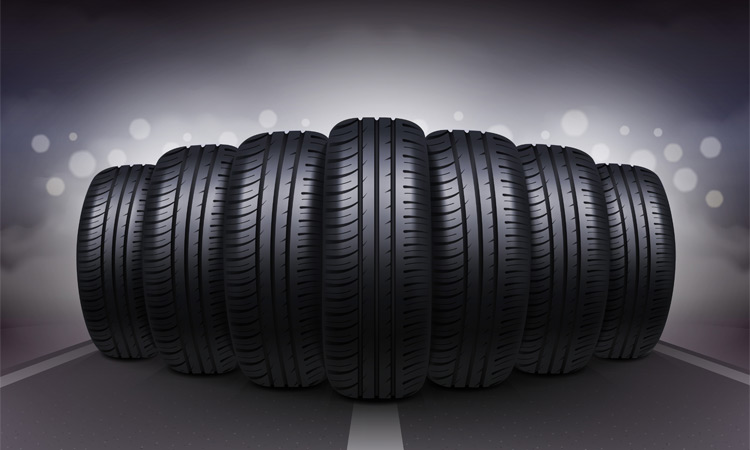
Tyres at the Center of the Revolution
The automotive industry is undergoing an extreme digital transformation, and the tyre sector is no exception. Today’s companies are no longer just selling vehicles or tyres but they are integrating technologies like connectivity, mobility, and autonomous systems to deliver smarter, more responsive solutions tailored to evolving customer expectations. This shift is reconsidering how value is created and delivered across the automotive value chain.
Traditionally built for grip, load-bearing, and shock absorption, tyres are now evolving into intelligent, tech-enabled components essential to vehicle performance, safety, and sustainability, especially in the era of electric and autonomous vehicles. According to a Research Gate conference paper titled- India on the Move: An Appraisal of Indian Tyre Industry, After China, Europe, and the United States, India is the fourth largest market for tyres in the world. Tyres manufactured in India are being exported to more than 100 countries in the world, including the most astute regions such as US and European nations.
History of Tyre Industry
The tyre industry began in the mid-1800s when Charles Goodyear invented vulcanised rubber, followed by John Boyd Dunlop’s air-filled tyre in 1888. In India, the industry started in 1926 with Dunlop Rubber Limited setting up the first tyre company in West Bengal, as noted by Inspirajournals. While the broader rubber industry dates back to 1921 with India’s first rubber goods plant in Calcutta.
Throughout the 20th century, innovations like synthetic rubber, radial tyres, and run-flat designs transformed the sector. Today, tyre manufacturers are increasingly focused on sustainability, using eco-friendly materials and advanced technologies to reduce environmental impact.
Tyres in the Age of Electrification
Electric vehicles (EVs) have reshaped tyre design, requiring tyres that can handle heavier loads, withstand instant torque, and maintain efficiency and durability. According to a social publishing platform Medium, the launch of electric vehicles in India and abroad presents a whole new opportunity for tyre manufacturers. Regardless of their batteries and range, tyres are another crucial factor impacting EV development and growth. According to Michelin’s research, selecting adequate tyres can impact the range of electric vehicles by up to 15%.
What’s changing?
- Tyres now have ultra-low rolling resistance designs to help electric vehicles go further on a single charge.
- New tread compounds are being used so tyres can handle the strong power of electric motors without wearing out too quickly.
- Noise-reduction features, like special tread patterns and foam inserts, are added to keep the ride quiet inside the car.
Expert Voice
“We have had to rethink the tyre from the ground up for EVs,” says Dr. Rajeev Kumar, Head of R&D at Apollo Tyres. “Even small gains in rolling resistance can add 10–15 km to the driving range, which is crucial in the Indian market.”
Supporting this, a senior R&D head at a leading global tyre company adds:
“EVs require tyres that can handle heavier loads without compromising on rolling resistance or wear life. We’re seeing advanced silica compounds, multi-layer treads, and low rolling resistance designs becoming the norm.”
Moreover, the near-silent operation of EVs has pushed manufacturers to address noise levels more aggressively. Expect to see innovations like noise-absorbing foam inserts and specific tread patterns designed to reduce cabin noise.
The Rise of Smart Tyres – Turning Rubber into Data
Smart tyres are the next big leap, equipped with sensors that monitor pressure, temperature, and tread wear, sending real-time data to drivers and vehicle systems. As connected and autonomous vehicles grow, these tyres enhance safety and maintenance while enabling smarter, data-driven decisions on the road. The Automotive Smart Tire Market Size was valued at USD 90.90 billion in 2023 and is estimated to grow with a CAGR of 8.60% from 2024 to 2032. Through the year 2032, it is likely to reach around USD 206.39 billion, promoted by the expanding applications in terms of several automotive segments.
According to IMARC Group a global management consulting firm, The India smart tyres market size reached USD 3.0 Billion in 2024. Looking forward, IMARC Group expects the market to reach USD 6.1 Billion by 2033, exhibiting a growth rate (CAGR) of 7.20% during 2025-2033. The growing emergence of specialized research and development (R&D) centers to create smart tyre solutions designed for Indian roadways, climatic conditions, and vehicle categories and the escalating demand for improved efficiency and cost reductions in commercial transport are bolstering the market growth.
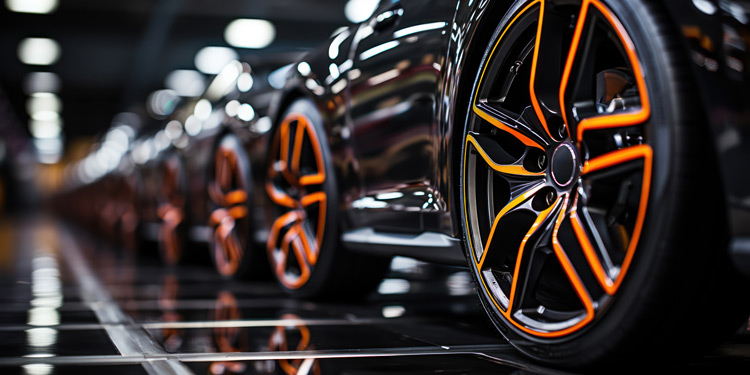
In India, JK Tyre’s ‘Treel’ system was one of the first to use Bluetooth sensors that connect tyres to smartphones, letting users check tyre health in real time. Big companies like Bridgestone, Michelin, and Continental, along with several start-ups, are also working on smart systems that do more than just warn about low pressure—they can suggest when to rotate or replace tyres, and even spot alignment problems early. For businesses that run vehicle fleets, these technologies help make their operations safer and cut down on both downtime and maintenance costs.
“Tyres are no longer passive components. In the autonomous world, they are part of the sensing and decision-making loop,” says Sandeep Sharma, VP – Innovation, Bridgestone India.
Sustainable Innovations
The World Business Council for Sustainable Development notes that, globally, about 1 billion tyres reach the end of their life each year. The impact of tyres on the environment is huge, so manufacturers are finding new ways to make tyres greener. They are using natural materials like rubber from dandelions and silica from rice husks, adding recycled carbon black and steel into new tyres, and improving recycling and re-treading methods to make old tyres useful again.
MRF and CEAT have started using solar power in their factories and are adding more eco-friendly materials to their top tyre ranges. Michelin aims to make all its tyres fully sustainable by 2050, with Bridgestone setting similar goals. New tyre innovations now use materials like dandelion rubber, rice husk silica, bio-based oils, and recycled content. Companies are also teaming up to improve tyre recycling and energy recovery. In 2024, the Indian government introduced Extended Producer Responsibility rules for tyres, speeding up efforts to reuse and recycle. Around the world, stricter rules on old tyres are pushing manufacturers to find greener solutions even faster.
The Road Ahead: Innovations to WatchHere’s a sneak peek at some tyre innovations on the horizon:
|
Smart tyres for autonomous vehicles
As self-driving vehicles become more common, tyre manufacturers are developing advanced solutions to meet their unique requirements. Smart tyres for autonomous vehicles come equipped with sensors that monitor pressure, temperature, tread wear, and road conditions, feeding real-time data to the vehicle’s systems for safer, more efficient driving. Some can even self-adjust pressure or detect damage to minimize downtime. “Tyres are no longer passive components. In the autonomous world, they are part of the sensing and decision-making loop,” says Sandeep Sharma, VP – Innovation, Bridgestone India.
To further support this shift, innovations like airless tyres (e.g., Michelin’s Uptis), self-healing materials, and adaptive tread patterns are being developed. These technologies aim to improve durability, reduce maintenance, and enhance performance across varying road and weather conditions.
India’s Tyre Industry Accelerates Growth in 2025
In addition to all the technological advancements, India’s tyre industry is riding a wave of strong momentum in 2025, fuelled by rising demand across segments, export expansion, and a clear shift towards sustainability and innovation. According to Wright Research, in 2025, the Indian tyre industry is expected to pick up speed, fuelled by the robust Indian automotive industry and rising demand for high-grade tyres. The 8-10% projected growth rate of the industry is set to take it to Rs 80,000 crores by 2025.
India’s rising automobile production and growing exports of vehicles like tractors, buses, trucks, and cars are driving strong demand for tyres. Increased income levels and limited public transport in rural areas are also contributing to higher vehicle ownership across segments.
From two-wheelers and passenger cars to commercial and military vehicles, tyre demand is expanding rapidly. Coupled with India’s lower logistics costs, domestic manufacturers enjoy a competitive edge in global markets, further fuelling industry growth.
What’s driving growth:
Key challenges:
|
Strong Domestic Demand
According to Credence Research, The India Tyre market was valued at USD 16,298.15 million in 2024 and is expected to reach USD 25,848.74 million by 2032, growing at a CAGR of 5.93%.
The Indian tyre market is growing, mainly because more people are replacing old tyres, which makes up over half of all tyre sales. Strong sales in passenger cars, commercial vehicles, and two-wheelers are leading to more tyre replacements. At the same time, car makers are increasing production, which is also boosting demand for new tyres from Original Equipment Manufacturers (OEMs).
Domestic tyre volume growth is expected to moderate to 4-6% in FY2025 from an estimated 6-8% in FY2024 on the back of elevated base and subdued growth in the Commercial Vehicle (CV) segment, according to Investment Information and Credit Rating Agency (ICRA), an Indian independent and professional investment information and credit rating agency. However, ICRA anticipates domestic demand from OEMs in certain consumer segments like passenger vehicles and two-wheeler as well as replacement to remain healthy, supporting overall tyre volume expansion in FY2025. While revenues would expand by 5-7% in FY2025, high natural rubber prices and increasing crude prices are likely to moderate the tyre industry’s margins by 200-300 bps in FY2025.
According to the Automotive Tyre Manufacturers’ Association (ATMA), the Indian tyre industry crossed the turnover of Rs 90,000 crore in FY24, and early estimates for FY25 suggest growth of 7–9%, led by replacement sales and OEM recovery.
“India has the talent, scale, and cost advantage to become a global hub for next-gen tyres,” says Anshul Gupta, industry analyst at CRISIL. “But success will depend on how fast local players adopt cutting-edge innovation and align with global sustainability standards.”
Export Growth and Global Tyre Industry
According to Wright Research, China leads the tyre market worldwide with a market share of approximately 50%, with Europe, the US, India and Japan further behind it. India Tyre Industry has demonstrated exemplary resilience and poised to grow by 7-9% per annum between 2020 and 2024 and will surpass the US to become the third largest tyre market globally.
Indian tyre manufacturers have become significant global players, with exports contributing nearly 25% of the industry’s revenues. The US, Europe, and Southeast Asian markets continue to see increasing acceptance of Indian tyres, particularly in the Truck, Bus Radial (TBR), and Passenger Car Radial (PCR) categories.
“In 2025, we expect tyre exports to cross the $2.5 billion mark, up from $2.1 billion last year, supported by a strong order book from international markets,” said an ATMA spokesperson.
Policy Support and Challenges
Government policies, including the Production Linked Incentive (PLI) scheme and focus on Make-in-India, have provided tailwinds. The Indian government introduced the PLI scheme to boost domestic manufacturing in the automotive and auto components sector. With an allocation of Rs 26,000 crore, the scheme aims to enhance local manufacturing capacity and attract global investments. Tyre manufacturers benefit from this incentive, as it encourages the production of advanced automotive components, including tyres for electric vehicles and fuel-efficient vehicles.
However, the industry continues to face challenges such as raw material price volatility, particularly natural rubber, and the need for enhanced testing and certification infrastructure to meet evolving global standards.
“The roadmap ahead will require balancing cost competitiveness with technology investments, especially as global and domestic regulations tighten around tyre labelling, performance, and sustainability,” said a senior industry executive.
“India has the talent, scale, and cost advantage to become a global hub for next-gen tyres,” says Anshul Gupta, industry analyst at CRISIL. “But success will depend on how fast local players adopt cutting-edge innovation and align with global sustainability standards.”
Final Word: The Road Ahead
In today’s rapidly evolving mobility landscape, tyres are becoming critical innovation enablers—smarter, greener, and deeply integrated into the future of transportation. While they may not get as much attention as EVs or AI systems, tyres are central to vehicle performance, safety, and sustainability. With rising demand, growing exports, and a strong focus on technology, India’s tyre industry is poised for steady growth, with analysts projecting a 7–8% CAGR through 2030 driven by EV adoption, premium products, and global expansion
Article by – Sudhanshu Nayak
 Sudhanshu Nayak, a dynamic mechanical engineer, is driven by a fervor for cutting-edge technologies like 3D printing, cloud manufacturing, and Industry 4.0. Sudhanshu Nayak, a mechanical engineer, gained invaluable firsthand experience with 3D printing during his tenure at innovative startups. His youthful energy fuels a deep expertise in social media marketing, technical content creation, and market research. Read More from Sudhanshu