

Temperature management in Electric Vehicles
Article by - Vishwas Kale, Managing Director, Vijayesh Instruments Pvt Ltd
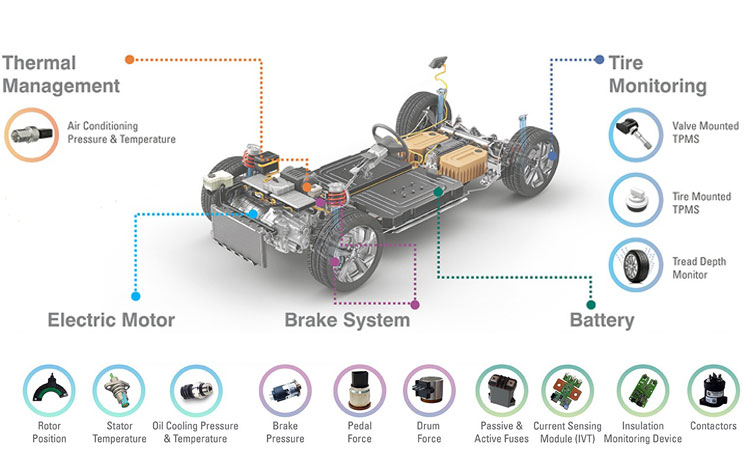
The automotive industry has seen so many changes from regular petrol-operated vehicles to ones using diesel as fuel to the latest electric power charged vehicles. With growing requirements, the automotive sector has focused immensely on upgrading and making the systems better. Temperature is a very important parameter for the proper function of an automobile whether petrol or diesel-fuelled or electric. In electrically operated vehicles temperature management is vital and mandatory to consider. Here for example, the batteries are susceptible to temperature variations, and it needs to be monitored ideally. There are other areas also where temperature needs to be monitored.
The importance could be summed up as:
- Safety:To detect potential overheating issues and trigger safety measures like reducing charging current or shutting down the system.
- Performance:Maintaining optimal battery temperature maximizes range and charging efficiency.
The measurement locations are:
- Individual battery cells:For the most accurate monitoring of potential imbalances within the battery pack.
- Battery pack cooling system:To monitor the effectiveness of the cooling system.
- Motor and power electronics:Should be monitored for potential overheating issues
As an example, in general, atmospheric conditions can also be problematic. Cold, heat, and even humidity can bring considerable variations in the output of automobile. But with due diligence, many components function correctly or as intended. When the temperature is too low, it becomes highly problematic to get the engine running. May it be diesel or petrol, the fuel does not burn properly, resulting in higher emissions. In an EV, around or below 5°C, an electric battery cannot be charged optimally, and below -40°C, a battery seizes to function at all. Similarly, overheating has its critical issues; power loss, damage to the vehicle, blaze, or even explosions. So, temperature parameters of all the other components need to be managed with proper management.
The sensors used are:
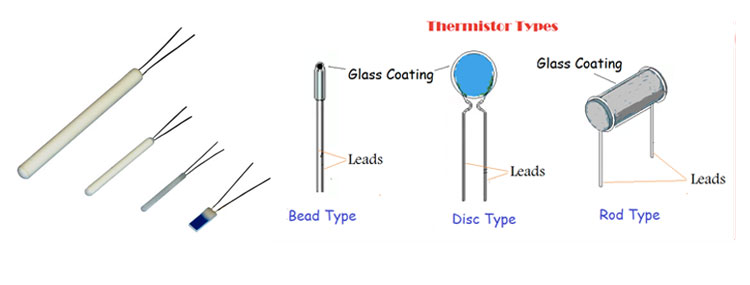
Thermistors:Commonly used due to their high accuracy and ability to measure small temperature changes, often placed directly within individual battery cells.
A thermistor is a semiconductor type of resistor whose resistance is strongly dependent on temperature. Thermistors are made from metallic oxide and are moulded into shapes like beads, disks, or cylinders. When the temperature changes, the resistance of the thermistor changes. The change in resistance can be detected and measured by an electrical circuit. There are two main types of thermistors: Negative Temperature Coefficient (NTC) and Positive Temperature Coefficient (PTC). They can have the best accuracy of +/- 0.50C
Thermocouples: Can be used in certain applications due to their durability and ability to withstand high temperatures.
A thermocouple is a device for measuring temperature. It comprises two dissimilar metallic wires joined together to form a junction. When the junction is heated or cooled, a small voltage is generated in the electrical circuit of the thermocouple which can be measured, and this corresponds to temperature. K type can have the best accuracy of +/- 1.10C
Resistance Temperature Detectors (RTDs): May be used for precise measurements in critical components.
Resistance temperature detector (RTD), is composed of certain metallic elements whose change in resistance is a function of temperature. In operation, a small excitation current is passed across the element, and the voltage, which is proportional to resistance, is then measured and converted to units of temperature calibration. The RTD measurement element is manufactured by winding a wire (wire wound elements) or plating a film (thin film elements) on a ceramic or glass core and sealing the element within a ceramic or glass capsule. They can have the best accuracy of +/- 0.30C
Sensor Selection and Failures
The sensor must have fast response, good accuracy and long life. When there is a failure of sensors, it is a serious mater. So, it is necessary to find why the temperature measurement as a whole failed, and necessary actions should be initiated.
The causes probably may be looked into:
- Protective sheath material, its dimensions and design
- Design of sensor
- Incorrect installation
- Improperly made thermocouple junction or joints
- Measuring software or instrument fault
The sensor is of a robust design, but it also ages with use. It cannot be repaired and must be replaced.
Batteries
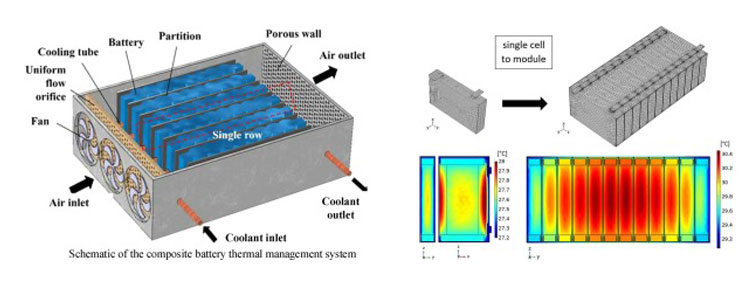
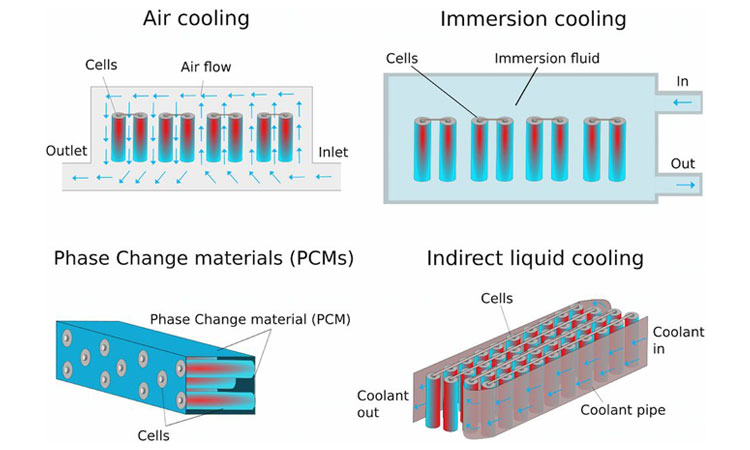
In EVs, temperature measurements are primarily focused on monitoring the battery pack. The battery pack is the most critical component for temperature monitoring due to its potential for thermal runaway if overheating occurs. The sensors like RTDs or thermistors are used to accurately check the temperature of individual cells within the battery. This ensures safe operation by preventing overheating and maximizing battery performance by maintaining optimal temperature ranges. This is crucial as extreme temperatures can significantly impact battery capacity and lifespan. Temperature sensors at the cells and throughout the cooling system are needed to provide real-time data for the model to operate properly. If cells are charged too quickly or overheat while the vehicle is in use, the system must take quick action to immediately reduce the temperature of the cells.
At the core of every electric vehicle is its lithium-ion battery pack. Extreme temperatures are EV battery’s worst enemy. Lithium-ion battery cells perform best in a temperature range between 15-45℃. Temperatures above that are severely damaging to the battery, while colder temperatures reduce the output of the battery’s cells, decreasing range and available power. Even when an EV is not in use (recharging), thermal management systems are always working to monitor or maintain battery internal temperatures. While any temperatures outside the optimal comfort zone will impact EV car efficiency, the vehicle has clever systems to keep the system in its own comfort zone. Generally, when discharging, the batteries prefer to stay below 45℃, and while fast charging, they like temperatures somewhat above that temperature, around 55℃, to reduce the internal impedance of the cells and allow the electrons to quickly fill the cell.
To manage these conditions, the system makes use of coolant temperature sensors in and out of the pack’s cold plate as well as cell and busbar temperature inside the pack. This also extends to monitoring coolant temperature at the external heat exchangers, as well as pressure and temperature at the expansion valves and critical points along the refrigerant loop. This high level of monitoring by sensors provides critical data to control precise amounts of heating and cooling from these systems to optimize pack performance while minimizing the parasitic energy loss from running pumps, compressors, and auxiliary heating and cooling components.
Rotor Temperatures
In an electric vehicle (EV), the rotor temperature refers to the temperature of the spinning component within the electric motor, typically ranging between 80°C to 100°C depending on the motor design and operating conditions, and is considered a critical parameter to monitor for optimal performance and safety. Directly measuring rotor temperature is difficult as the rotor is spinning, so most EVs use algorithms to estimate the temperature based on factors like motor current, voltage, and ambient temperature.
Importance of monitoring:
Excessive rotor temperature can lead to decreased motor efficiency, potential damage to the motor components, and reduced vehicle range.
Cooling systems:
EVs often have cooling systems designed to manage motor temperature, including liquid cooling loops that can regulate the rotor temperature within acceptable limits.
Sensor types used are:
Indirect sensors: Temperature sensors on the motor housing can provide an indication of the overall motor temperature, but not the precise rotor temperature.
Slip rings: In some testing scenarios, slip rings can be used to connect temperature sensors directly to the rotating rotor, but this method is not practical for most EVs due to complexity and maintenance issues.
Measuring the rotor temperature of a permanent magnet synchronous motor (PMSM)
The load capacity of permanent magnet synchronous motors (PMSM) is limited due to the use of a magnet in the rotor, as a rotor temperature must not exceed certain limit values. When using PMSMs as electric vehicle motors, it is important to know or predict the rotor temperature. This is necessary to get stable motor performance, guarantee and improve the operational safety of the system.
Safety problems with PMSMs due to high rotor temperatures
There are two types of motors used in modern electric vehicles: Asynchronous and synchronous motors. Synchronous motors either require a DC voltage applied to the rotor for a magnetizing coil through which current flows. They are referred to as externally or current-excited. Alternately, they have a permanent magnet in the rotor (permanently excited). But for permanent magnet synchronous motors (PMSM), it is important to know that their load capacity is limited by the rotor temperature. If the Curie temperature of the magnets is exceeded, the electrical polarization is lost and the motor will fail. If the rotor temperature is too high, this can lead to potential thermal safety issues in the system.
Temperature measurement technology
When using temperature measurement technology in the “heart” of the electric motor, there are high demands on measurement and transmission technology. High temperatures, high speeds, strong electromagnetic influences and, last but not least, tight installation space are all critical issues. Temperature resistance up to 200°C, high electromagnetic robustness, oil resistance and high freedom of design in combination with compact construction and highest speeds up to 30,000 rpm were only known from the aviation industry before.
The acquisition unit and telemetry modules with temperature sensors measure reliably and precisely to 1°C under the toughest operating conditions. If desired, even digitally compensated to <0.2 °C deviation from the measured value are designed. Any thermocouples (type K ) or alternatively Pt100 temperature sensors can be used. As a rule, only 0.5 mm thick, flexible thermocouples are used. The necessary hole diameter for the wiring has a negligible effect on the drive process. The rotor telemetry is robust against EMC and depending on the customer’s requirements, is designed for speeds of up to 30,000 rpm.
Lithium-ion (Li-ion) batteries may fail through thermal runaway caused by increased temperature. It is thus important to monitor battery temperature for prevention of the battery failure. Currently, thermal monitoring of the battery for electric vehicles (EVs) is being conducted by multiple sensors. As the size of battery system increases and the cells are closely packed to exploit high power density, the number of sensors also increased to monitor the battery system. However, this increased number of sensors enhances the probability of the sensor malfunction, which prevents robust thermal monitoring, and causes increased maintenance cost and customer complaints. So, temperature prediction model for EV battery pack is generated for minimizing the number of sensors and keeping the monitoring capability.
Calibrations and Tests
There are calibration baths, calibrators etc to check the sensors.
The standards are:
- Thermistor IS 14122, IS 1479
- K type thermocouple IS 7358, IS 1255, IS 2053
- RTD IS 2848
All sensors need to undergo appropriate calibration and environment tests before acceptance into an EV.
Vishwas Kale is Managing Director, Vijayesh Instruments Pvt Ltd, Pune and has more than thirty years’ experience in instrumentation. He was twice President, International Society of Automation (ISA, USA) in India, now its Honourary Senior Life Member, Advisory Member of Committee of Bureau of Indian Standards (BIS), Member of Experts Panel of NCTS-Indian Institute of Foundrymen, among many positions he holds with various organizations. He has received awards for innovative products.
Author of two books:
- Instrumentation and Process Control Techniques in Foundries
- Management for Success