

Fuel Tanks Tests- a review
Article by - Vishwas Kale, Managing Director, Vijayesh Instruments Pvt Ltd
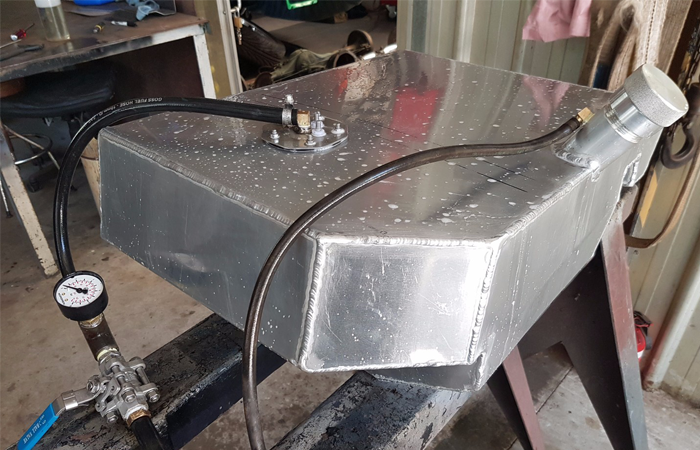
The reasons fuel tanks need to be tested.
- To Ensure Safety as fuel tanks can pose a danger if they are not in good condition
- To Improve Fuel Efficiency because a fuel tank in poor condition can lead to decreased fuel efficiency
- To Detect Leaks as leaks in a fuel tank can be dangerous and decrease fuel efficiency
There is no single “standard” for car fuel tanks, as requirements vary by vehicle type, fuel, and location, but key standards include safety, durability, and capacity. For metallic and plastic tanks, standards address aspects like corrosion resistance, leakage tests, and protection against impact and rollover. Organizations like the ISO – International Organization for Standardization and national bodies like the Bureau of Indian Standards (BIS) and the Automotive Research Association of India (ARAI) publish specific standards for different fuel tank types.
The Bureau of Indian Standards (BIS) has specific Indian Standards for fuel tanks in vehicles, categorized by the type of fuel and vehicle. These standards specify the safety requirements for the assembly and materials used for the tank and its connections.
BIS standards for fuel tanks
Metallic fuel tanks: IS 12056:1987 provides recommendations for the safety requirements for fuel tank assemblies in automotive vehicles, including passenger cars, trucks, and buses. This standard is designed to minimize the fire hazard from fuel spillage during and after a crash or collision.
Plastic fuel tanks (4-wheelers): IS 15547:2005 covers the performance and safety requirements for plastic fuel tanks used in four-wheeled automotive vehicles.
Plastic fuel tanks (2- and 3-wheelers): IS 14681 specifies the requirements
Key provisions mandated by these BIS standards include:
Material properties: The standard specifies the requirements for the thermal, mechanical, and chemical behaviour of the tank material to ensure it is suitable for the operating conditions.
Integrity and security: The tank and all its fittings must maintain their integrity to prevent fuel spillage during and after a collision.
Leakage and pressure tests: Fuel tanks must undergo testing to ensure they can withstand internal pressure without leaking. For example, IS 12056 requires a tank to withstand a specified internal pressure without leakage for 5 minutes.
Installation requirements: The standards outline proper installation procedures. For instance, tanks must be designed and installed to withstand the effects of internal and external corrosion, as well as vibrations.
Heat protection: Fuel tanks and filler pipes must be positioned to avoid heat exposure from the exhaust system and other heat sources. For example, IS 12056 requires a minimum clearance between the fuel tank and the exhaust pipe unless a heat shield is used.
Ventilation and overflow: The system must be designed with appropriate ventilation and safety vents to release excess pressure. The standards also ensure that fuel overflow during filling does not spill onto electrical or exhaust systems
Some tests are as below in brief
Permeability test to be performed at a temperature of 40+/-2 deg C. Prior to the test the tank is filled up to 50% of its rated capacity with test fuel. It is kept in the temperature condition for at least four weeks or until there is a constant weight loss. The tank is then emptied and refilled to 50% again, closed and stored under the temperature conditions. Under test pressure of 30kPa(gauge). The weight loss due to diffusion shall be determined during the eight-week test. The loss should not exceed 10 g per 24 hours.
Mechanical strength test is done by filling the tank fully with test liquid at temperature of 53 +/- 2 deg C. The relative internal pressure is to be 30 +/- 5 kPa (gauge) The tank is kept closed for five hours. There should be no deformation as specified in the standard.
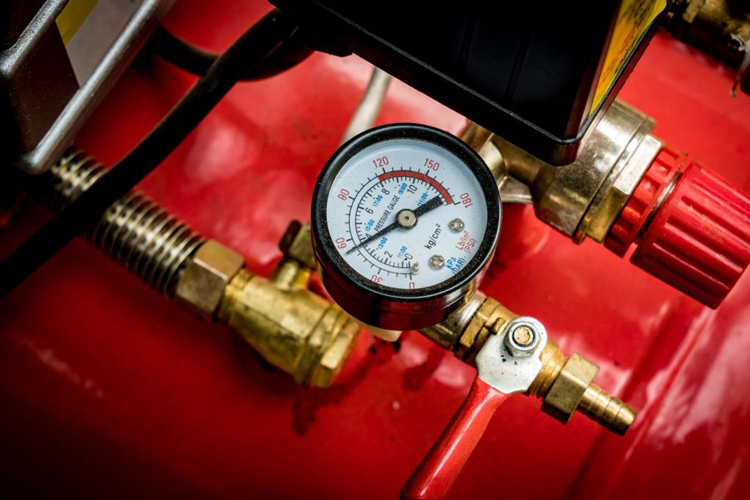
Pressure test is critical. Fuel tanks are to be tested to a pressure of 24.525kPa or 2.5m water or 3.6psi. The pressure for the test is measured by a pressure gauge. The test needs precise deflection measurement of a top and bottom surface of a supplied fuel tank. The readings are be taken under a specified pressure/vacuum inside the fuel tank. The fuel tank is also be fully sealed to prevent a reading error.
The vehicle is fitted on vehicle stand in a levelled horizontal position stands to pre vent suspension movements. Air is applied to the tank until the required test pressure is achieved. The air is then shut off and all welded seams, joints and connections are tested with soapy water to determine if there are any leaks and the positions of the leaks. Where leaks do occur, the leak area is to be re welded, and on completion, the air test repeated. This operation is repeated until no further leaks are observed.
The deflection of the fuel tank is recorded in four points. Two point are underneath the fuel tank and two points above the fuel tank in line with the fuel level tank measuring gauge.
Then there are Fuel resistance tests, Fire resistance tests, High temperature tests explained in the various standards.
Vishwas Kale is Managing Director, Vijayesh Instruments Pvt Ltd, Pune and has more than thirty years’ experience in instrumentation. He was twice President, International Society of Automation (ISA, USA) in India, now its Honourary Senior Life Member, Advisory Member of Committee of Bureau of Indian Standards (BIS), Member of Experts Panel of NCTS-Indian Institute of Foundrymen, among many positions he holds with various organizations. He has received awards for innovative products.
Author of two books:
- Instrumentation and Process Control Techniques in Foundries
- Management for Success