

The Next Mobility Transition: Why India Must Prepare for an ‘Infrastructure-First’ EV Growth
Article by - Harry Bajaj, Founder & CEO, Mobec Innovation

India today stands at the threshold of a decisive transformation in its mobility landscape as it transitions to EV space. Electric vehicles are no longer an emerging curiosity; with nearly two million EVs sold in 2024 alone, they have become a mainstream choice for millions of Indians. As the world’s third-largest automotive market—contributing roughly 7% to national GDP—the country’s shift toward electric mobility carries deep implications for economic efficiency, national energy security, and environmental sustainability. Yet the speed at which EV adoption is accelerating has started to outpace the development of the infrastructure required to support it. To build a resilient and scalable EV ecosystem, India must now prioritise an infrastructure-first model instead of relying on a vehicle-led expansion.
The patterns of adoption across segments highlight this momentum. By late 2025, EV penetration in passenger three-wheelers had reached about 38%, cargo three-wheelers surpassed 20%, two-wheelers stabilised between 4.6% and 7%, four-wheelers crossed the 4% mark, and electric buses approached nearly 5% in early FY 2025–26. These shifts align with the government’s ambitious 2030 vision: 80% electrification in two- and three-wheelers, 70% in commercial cars, 40% in buses, and 30% in private vehicles. However, this promising growth masks a structural bottleneck—India’s charging infrastructure is neither sufficient nor evenly distributed to meet the rising demand.
Charging Infrastructure: The Pressing Gap in India’s EV Journey
India’s charging network has expanded aggressively in recent years, recording a CAGR of nearly 72% between FY22 and FY25. Even so, the gap remains stark. As of early 2025, the country has only one public charger for every 135–215 EVs, compared with global benchmarks where a charger typically supports six to twenty vehicles. The uneven distribution adds to the challenge: nearly 70% of public chargers are concentrated in Maharashtra, Karnataka, and Delhi, while the fast-growing Tier 2 and Tier 3 markets remain underserved. Reliability is another issue, with average uptime around 68%. Drivers frequently encounter non-functional stations despite their presence on digital maps, which erodes trust at a critical stage of market expansion.
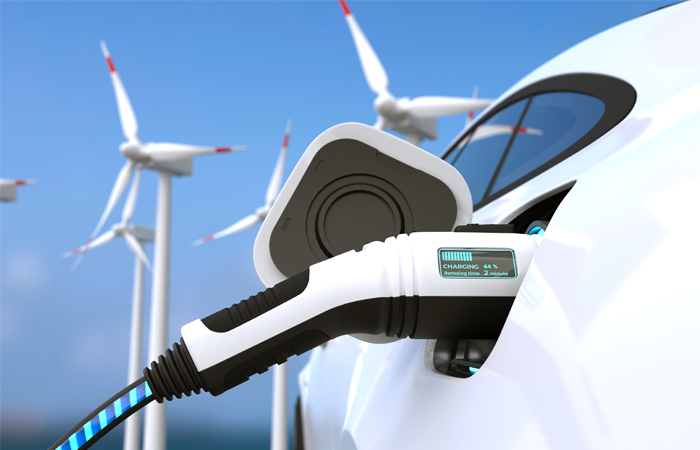
Electricity reliability presents an additional obstacle. Frequent power outages—often lasting two to four hours—continue to affect households and commercial locations across several states, forcing reliance on diesel generators. Since most EV charging in India will take place at homes and workplaces, an unpredictable power supply directly affects user confidence. In this context, mobile charging infrastructure is emerging as a practical and necessary bridge. By providing grid-independent charging that can be deployed rapidly and flexibly, mobile chargers ensure consistent access to power even in locations where permanent charging facilities or reliable grid connections are yet to be established. They also offer emergency support on highways, assist fleet operations, and stabilise charging availability during peak load periods.
Why Infrastructure Must Lead the Next Phase of EV Growth
India cannot afford a mismatch between vehicle adoption and the ecosystem required to support it. A strong, predictable, and widely accessible charging backbone is essential for building consumer confidence. Range anxiety remains one of the most persistent behavioural barriers, and unless charging stations become visible, reliable, and convenient, many potential buyers will hesitate to shift away from internal combustion engines.
Infrastructure planning is equally important for grid stability. Without coordinated energy management, large-scale EV charging can put pressure on distribution networks. However, when paired with renewable energy, modular energy storage, and intelligent charging systems, EV infrastructure can actually enhance grid resilience. For logistics companies, public transport operators, and fleet-based businesses, predictable charging access is the foundation for meaningful electrification at scale—directly influencing operational efficiency and emissions reduction.
Consumer reluctance also reflects these systemic gaps. Higher upfront prices, concerns about charging availability, long charging times, lack of home charging for apartment dwellers, fears around battery lifecycles, and differing charging standards all reinforce resistance. Strengthening infrastructure addresses these pain points and creates the conditions for more confident EV adoption.
The Road Ahead: Infrastructure as the Foundation of India’s EV Leadership
For India to build a future-ready mobility ecosystem, the next steps must involve expanding high-utilisation fast-charging corridors at airports, metro stations, industrial hubs, bus depots, and national highways. Alongside this, portable fast chargers, customised modular energy storage systems, and home/workplace AC chargers can serve areas where permanent infrastructure will take longer to mature. Integrating these solutions with solar power, hybrid inverters, and smart-grid technologies will reduce dependence on diesel generators and enhance uptime.
India has the capability, ambition, and entrepreneurial energy to lead the next phase of global clean mobility. But this leadership will not be measured solely by how many electric vehicles are sold. It will be defined by the strength, reliability, and intelligence of the infrastructure enabling their use. An infrastructure-first approach is not simply operationally prudent—it is essential for building a mobility system that is scalable, resilient, and aligned with India’s long-term economic and environmental goals.