

From High Input Costs to High Yields.. Why the EV Tractor Market Is Ready to Take Off in India
Article by Kaustubh Dhonde, Founder & CEO, AutoNXT
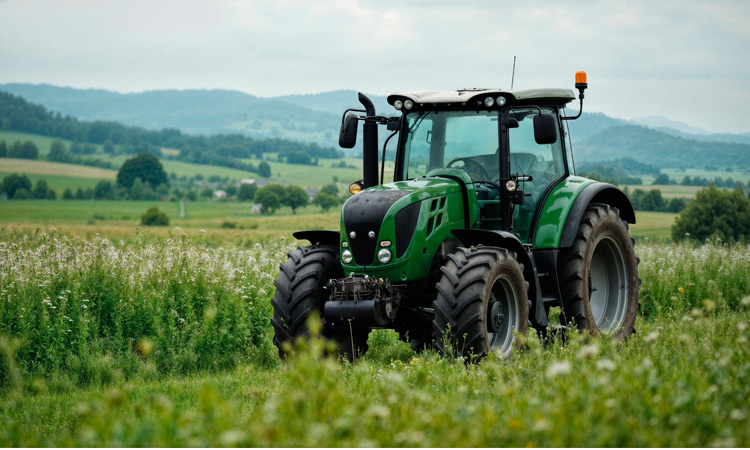

India’s agricultural sector, which contributes nearly 18% to the national GDP and employs over 58% of the workforce, is in urgent need of transformation. Amid rising fuel prices, increasing input costs, and growing environmental concerns, a quiet revolution is brewing in the fields: the rise of electric vehicle (EV) tractors. With the convergence of technology, sustainability, and economics, the EV tractor market in India is poised for rapid acceleration—driven by the promise of lowering operational costs while boosting farm productivity and long-term profitability.
Agriculture in India remains diesel-reliant, with tractors being one of the largest consumers of fuel in rural areas. Data from the Ministry of Petroleum and Natural Gas indicates that nearly 13% of India’s diesel consumption is attributed to agriculture, primarily for tractors and water pumps. The cost of diesel has surged by over 35% in the last five years, directly impacting the earnings of small and marginal farmers, who form more than 85% of India’s agricultural community. With diesel prices hovering around ₹90 per litre in many states, operating a tractor costs an average of ₹250 per hour, making it one of the most significant input expenses for farmers.
In contrast, electric tractors offer a more economical and sustainable alternative. These battery-powered machines can operate at a cost of just ₹80–₹100 per hour, depending on battery capacity, terrain, and usage patterns. Over the course of a year, a farmer using an EV tractor for 600 hours can save up to ₹90,000 in fuel expenses alone. Coupled with lower maintenance costs—about 25–30% less than diesel tractors due to fewer moving parts and no engine oil changes—EV tractors present a compelling economic case for adoption.
Recent technological advancements have addressed early concerns around power and performance. Today’s EV tractors, particularly in the 15–35 HP range, can handle most of the tasks required by small and medium farms, including tilling, ploughing, sowing, and hauling. With lithium-ion battery prices having dropped by nearly 85% over the past decade, the range and durability of electric tractors have significantly improved. Modern EV tractors can operate for 6–8 hours on a single charge, and some models now support battery swapping to eliminate downtime, a critical feature during peak farming seasons.
The market potential is substantial. India sells around 900,000 tractors annually, and while EV tractors currently make up a small fraction of this, analysts estimate the segment could capture 5–7% of the market by 2027, translating to over 60,000 units per year. Government initiatives are playing a pivotal role in accelerating this shift. The inclusion of electric tractors under the FAME-II scheme, the push for rural electrification, and state-level EV policies offering capital subsidies and tax exemptions are making these machines more affordable. Furthermore, financial institutions, including NABARD, are increasingly offering green loans to support smallholder farmers in making the switch.
Startups and OEMs are also stepping in with localized innovations. Companies like Cellestial E-Mobility, AutoNxt Automation, and others are developing indigenous EV tractor models with built-in IoT capabilities, remote diagnostics, and app-based controls. These features allow farmers to monitor battery status, track efficiency, and schedule maintenance, enhancing both usability and productivity. Such innovations also support precision agriculture—helping optimize resource use and improve crop yields.
However, challenges remain. The higher upfront cost of EV tractors—often 20–30% more than their diesel counterparts—continues to be a barrier for many farmers. In addition, rural charging infrastructure is still underdeveloped, although efforts are underway to deploy solar-powered charging stations and mobile charging vans in farming zones. Awareness and training also need to be scaled up to ensure farmers are comfortable adopting this new technology.
Despite these hurdles, the macroeconomic and environmental trends are undeniable. As India moves toward its net-zero emissions goal by 2070, and farmers seek relief from rising input costs, EV tractors stand out as a solution that aligns economic viability with ecological responsibility. The market is no longer waiting for the future—it is ready now. With the right policy support, financing mechanisms, and awareness initiatives, EV tractors can power a new era of Indian agriculture, turning high input costs into high-yielding, sustainable outcomes.